
5 Reasons Why Good Grades Don't Rule Out Dyslexia
Written by Sandie Barrie Blackley, Speech-Language Pathologist
Published on June 24th, 2026

Many parents of struggling readers and writers have questions about their child's school performance. Hearing that your child's teacher is satisfied with their performance should feel reassuring, but it can be confusing if you feel your child is not reaching their full potential at school.
Can a Child With Dyslexia Get Good Grades?
Yes. Many children with dyslexia earn passing or even strong grades, which is one of the most common reasons dyslexia goes undetected for years.
Since children with dyslexia are often bright, resourceful, and highly motivated, they tend to compensate for their reading and writing difficulties in ways that hold up well enough in the early grades. They may earn passing or even strong marks on tests and assignments while quietly working twice as hard as their peers.
Good grades can create a misleading picture, leading parents, teachers, and even the children themselves to dismiss concerns. But grades measure many things (effort, memory, verbal ability, and classroom participation), and they do not measure whether a child is reading and spelling as expected for their age.
A child can bring home a report card full of A's and B's and still have dyslexia.
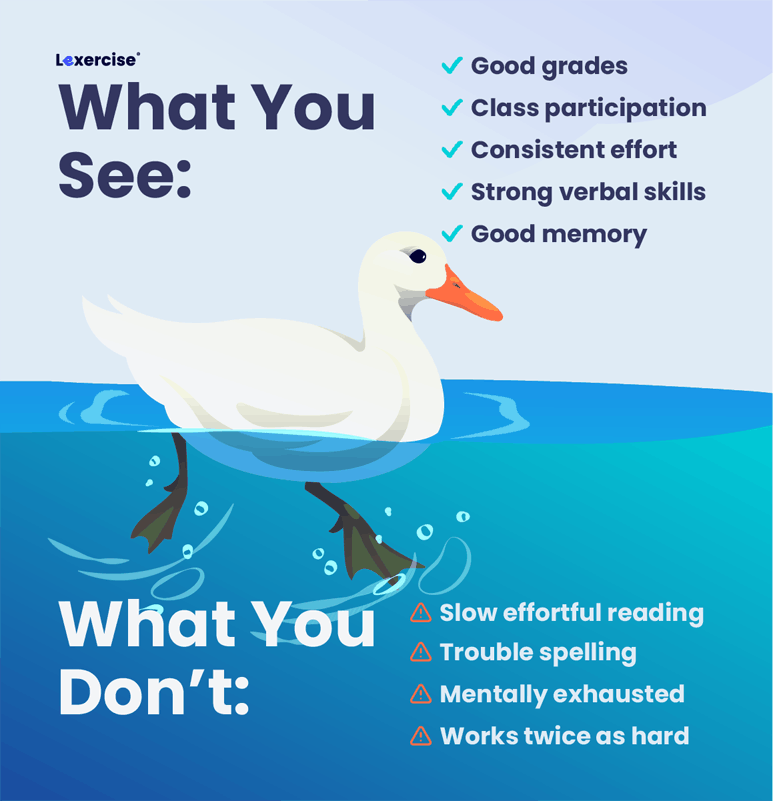
Why Good Grades Do Not Rule Out Dyslexia
1. Reading is reported to be "on grade level," which is confusing since you see your child struggle with reading and writing at home.
Reading tests vary widely from school to school and may not capture the full picture of your child's skills. In fact, grade-level reading is better thought of as a grade range rather than as a single grade level. In addition, children with dyslexia, including those with stealth dyslexia, often develop coping strategies that can make their reading struggles hard to spot. These can include guessing words from context, often assisted by strong oral language and vocabulary skills. These skills can mask their difficulties until the 3rd or 4th grade when decoding problems become more obvious.
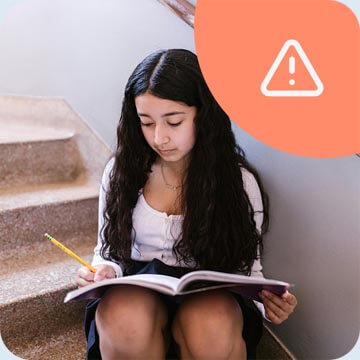
2. Your child's strengths might cause them to "slip through the cracks."
Children with dyslexia often compensate for their weaknesses with strengths such as a strong vocabulary and high emotional intelligence. They may be bright or even gifted, which can cause inconsistencies in their school performance. This makes it hard for parents and teachers to identify the root cause of their literacy struggles. Teachers may not be well-trained to recognize learning differences.
3. You see your child struggling at home, despite good reports from school.
As a parent, you might see more than what the school reports. Your child might manage well at school, but come home exhausted and frustrated. They might express feelings of not being as smart as their peers. Homework can become a daily battle, with your child struggling to complete assignments they should be able to do. You might see increased anxiety and avoidance of reading, writing, and homework.
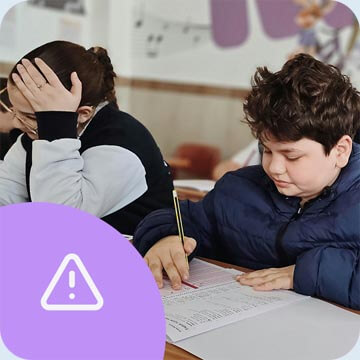
4. The school dismisses the signs of dyslexia you are seeing.
Public schools are not always required to screen for dyslexia. Even if the school provides dyslexia screening, there is no guarantee that students who fail the screening will receive timely and effective intervention. Due to limited training and support, school staff may miss the signs of dyslexia. Even if they recognize the signs, they often lack the resources to provide effective help for dyslexia.
5. Your child is given another label, such as "behavioral difficulties."
Children with dyslexia may exhibit counterproductive behaviors such as being the “class clown" or having difficulty sustaining attention, motivation, and organization for school work. Teachers might assume that because your child does well in other areas (e.g., if they’re seen as good at math but “bad” at reading), their literacy struggles stem from a lack of effort, which can lead to labels like "lazy."


What Are the Primary Signs of Dyslexia in Children?
Dyslexia's core signs involve struggles with reading, spelling, and decoding words, not intelligence or effort.
Teachers may not realize dyslexia is the root of these problems, especially if your child participates in class and does well on projects. They might not see a problem at all, and that's why knowing the signs yourself matters.
Don't let a good report card override your instinct if you see dyslexia symptoms, such as:
- Substituting words that make sense in the sentence when reading aloud.
- Omitting or changing sounds in words when reading or spelling.
- Memorizing words for a spelling test, but struggling to spell those words a day or two later, and in writing assignments.
Begin the Dyslexia Assessment Process With Our Free Dyslexia Screener
It's important to have your child assessed and treated early. This will give you and your child a clear path to overcome literacy struggles and achieve school success.
If you haven't taken our online dyslexia screener yet, we strongly recommend it for all parents of struggling readers, writers, and spellers. If you have completed the test, online dyslexia therapy from Lexercise is a great way to get children the help they need–even if the school cannot provide it.
Improve Your Child’s Reading
Learn more about Lexercise today.
Schedule a FREE
15-minute consultation