
Dyslexia Series on NPR News: Part 1
Written by Marie Lunney
Published on December 2nd, 2016
A new NPR radio series, “Unlocking Dyslexia”, sheds some light on the most common learning disability in America that is still a mystery to most. Gabrielle Emanuel, nprEd writer, and correspondent, is dyslexic herself. In her series, she goes through explaining the difficulties of dyslexia, the science behind it and the necessary steps to overcome it. This is part 1 of our 2 part review. Read part 2 here.
Dyslexia is a learning disability. When most people hear “learning disability” they equate it with “low intelligence”. Emanuel says “In fact, that’s an often-misunderstood part of dyslexia: It’s not about lacking comprehension, having a low IQ or being deprived of a good education” ("Millions Have Dyslexia”). Dyslexics often have average or above average intelligence and excel in other areas whether it be in math, sports, the arts, etc.
A dyslexic’s brain works differently than a “normal” brain does. “Learning to read requires co-operating parts of the brain and training them to recognize letters, clump those letters together into small units, relate those units to sounds and eventually, blend those sounds together into a word” (Emanuel, "How Science”). This does not come easily to a dyslexic’s brain.
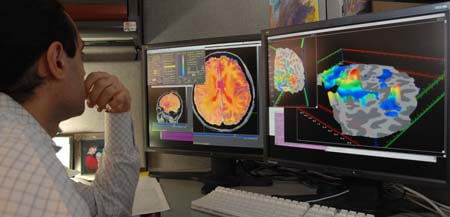 Guinevere Eden of Georgetown University’s Center for the Study of Learning is studying the differences between the dyslexic brain and a “normal” brain. Specifically, she is studying brain scans or the left temporoparietal cortex and occipitotemporal cortex, the parts of the brain used for processing spoken language and visually recognizing objects. Eden says “‘both areas are under-activated in dyslexia’” (Emanuel, "How Science”).
Eden’s studies among countless others have ruled out dyslexia as a vision problem. It is the way the brain is processing that causes these difficulties. For example, when we recognize or recall a chair:
the brain naturally sees it from many different angles -- left, right, up, down -- and, regardless of the perspective, the brain knows it is a chair. But that doesn’t work for letters…[b and d] are the same basic shape and, yet, two totally different letters. But, as it does with a chair, the brain wants to recognize them as the same object. (Emanuel, "How Science”)
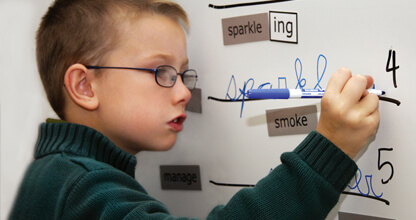 So, can a dyslexic’s brain start making these connections and learn how to read, write and spell effectively? Of course! The National Center for Learning Disabilities, American Academy of Pediatrics and International Dyslexia Association all recommend a specific method to teach a child with dyslexia, Structured Literacy. What happens to a dyslexic brain after Structured Literacy intervention? The two cortices responsible for reading in the left hemisphere become more active. Furthermore, Eden explains “‘Other areas become more active, and they’re not areas you think as of being involved in reading: They [are] in the right hemisphere’” (Emanuel, "How Science”).
Your child can immediately receive Lexercise Structured Literacy therapy and start seeing results. Call us at 1-919-747-4557 to learn more or take our free dyslexia screener here.
Works Cited: Emanuel, Gabrielle. "How Science Is Rewiring The Dyslexic Brain." Morning Edition. NPR. 29 Nov. 2016. Radio.
Emanuel, Gabrielle. "Millions Have Dyslexia, Few Understand It." All Things Considered. NPR. 28 Nov. 2016. Radio.
Photo Credits: NPR, Brain Scans, Child Writing
Improve Your Child’s Reading
Learn more about Lexercise today.
Schedule a FREE
15-minute consultation