
Causes of Reading and Spelling Problems and The Solutions!
Written by Sandie Barrie Blackley, Speech-Language Pathologist
Published on March 14th, 2026
What can neuroscience tell us about dyslexia and other language-processing difficulties? How do differences in the brain's wiring help explain the best approach to helping struggling readers, writers, and spellers? This article answers those questions and more.
How Brains Develop for Average Children
- First three years of formal schooling – During this time, the brain is rapidly firing, wiring, and interconnecting its literacy centers, especially on the left side of the brain–the area responsible for language, including speech sounds, letter symbols, reading, and writing.
- By 4th grade, the brains of most children who have received reading and writing instruction have formed strong interconnections (neural networks) among oral language, reading, and writing. For normal readers, these networks generally run in the background without much conscious effort, freeing the brain for other cognitive functions.
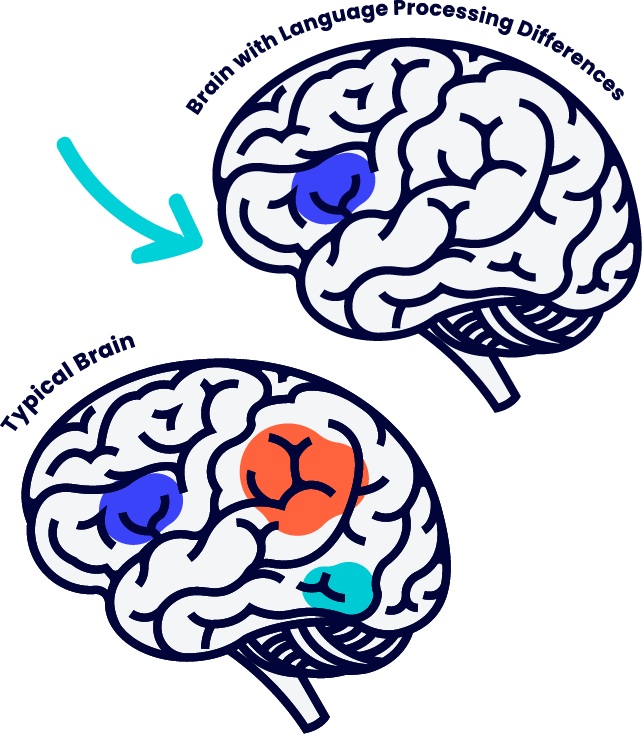
Brain Wiring in Children with Language Processing Differences
Nearly 30% of children have differences in brain wiring associated with language-based learning disabilities.
For example, studies show that, compared with typical readers, children with dyslexia exhibit greater right-hemisphere activity during reading. This can result in inefficient processing, slower reading and writing, and reduced efficiency.*
Neuroscience Finds Two Main Reading and Writing Disorder Patterns
• Dyslexia
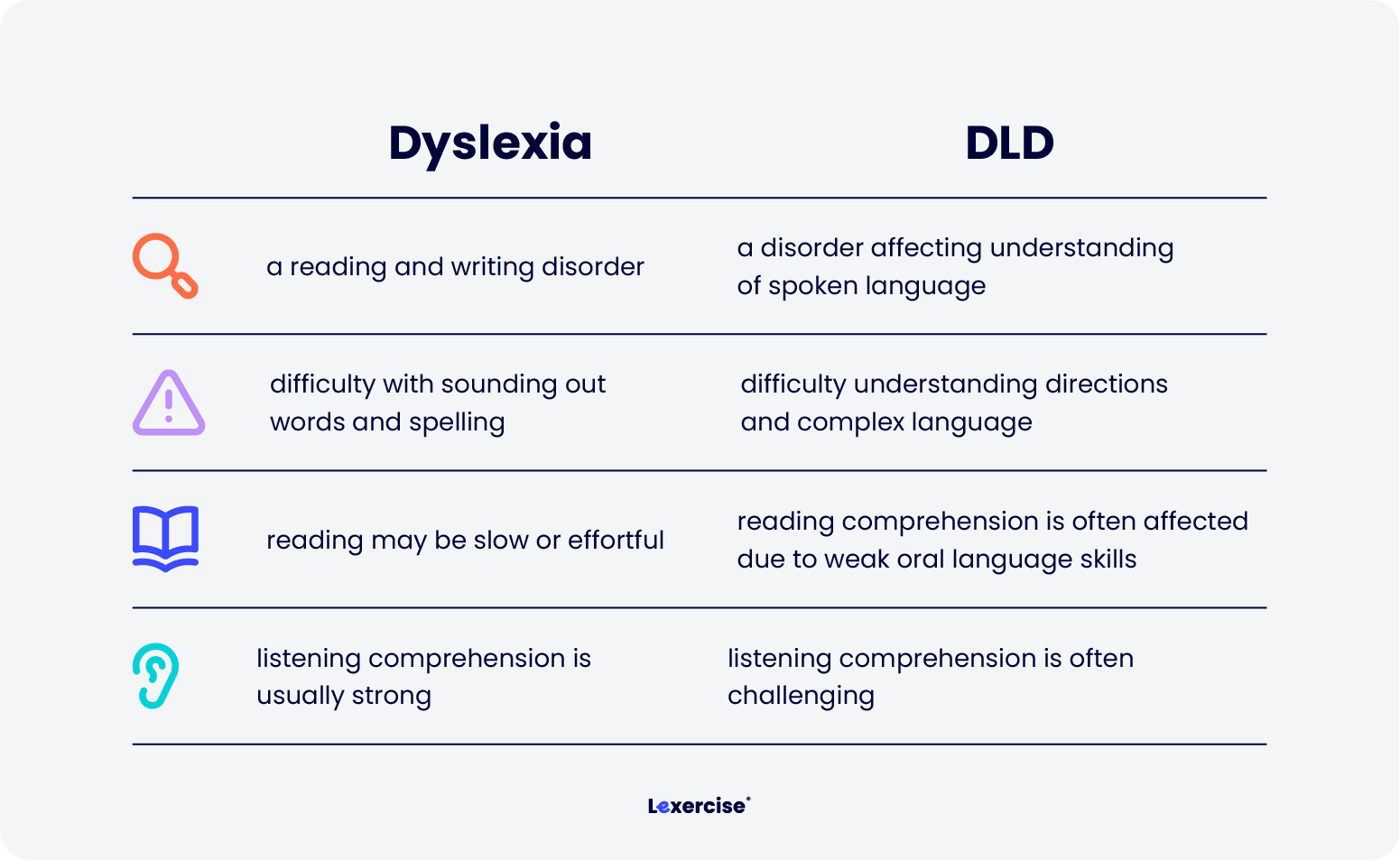
Dyslexia is the most common cause of reading and writing problems. Children with dyslexia often struggle with decoding (sounding out words), spelling patterns, and reading speed, even though their overall intelligence and oral language comprehension are typically average or above average. These difficulties often stem from weaknesses in phonological processing—the ability to recognize and manipulate the sounds in spoken language. Because listening comprehension is generally intact, dyslexia is distinct from broader language disorders and is specifically related to the processing of written language.
• Developmental Language Disorder (AKA, Specific Language Impairment)
Developmental Language Disorder (DLD), formerly called Specific Language Impairment (SLI), affects a person's ability to acquire and use language, even when they have typical intelligence and no hearing loss or neurological damage.
Individuals with DLD may struggle to understand spoken language, follow multi-step directions, or grasp complex vocabulary and sentence structures. These language-processing challenges can, in turn, affect reading comprehension and written expression, as both depend heavily on strong oral language skills. DLD is not caused by a lack of effort or ineffective teaching methods; rather, it reflects underlying differences in how the brain processes language.
Effective Treatment and Support for Reading, Spelling, and Writing Difficulties
Lexercise specialists use the Lexercise Structured Literacy Curriculum™ online, in live, 1-on-1, interactive lessons. While some aspects of structured literacy, such as explicit, systematic, and multisensory instruction, have been used for over 70 years, the science of reading continues to evolve. Applying these new insights enables a faster and more effective response to intervention.

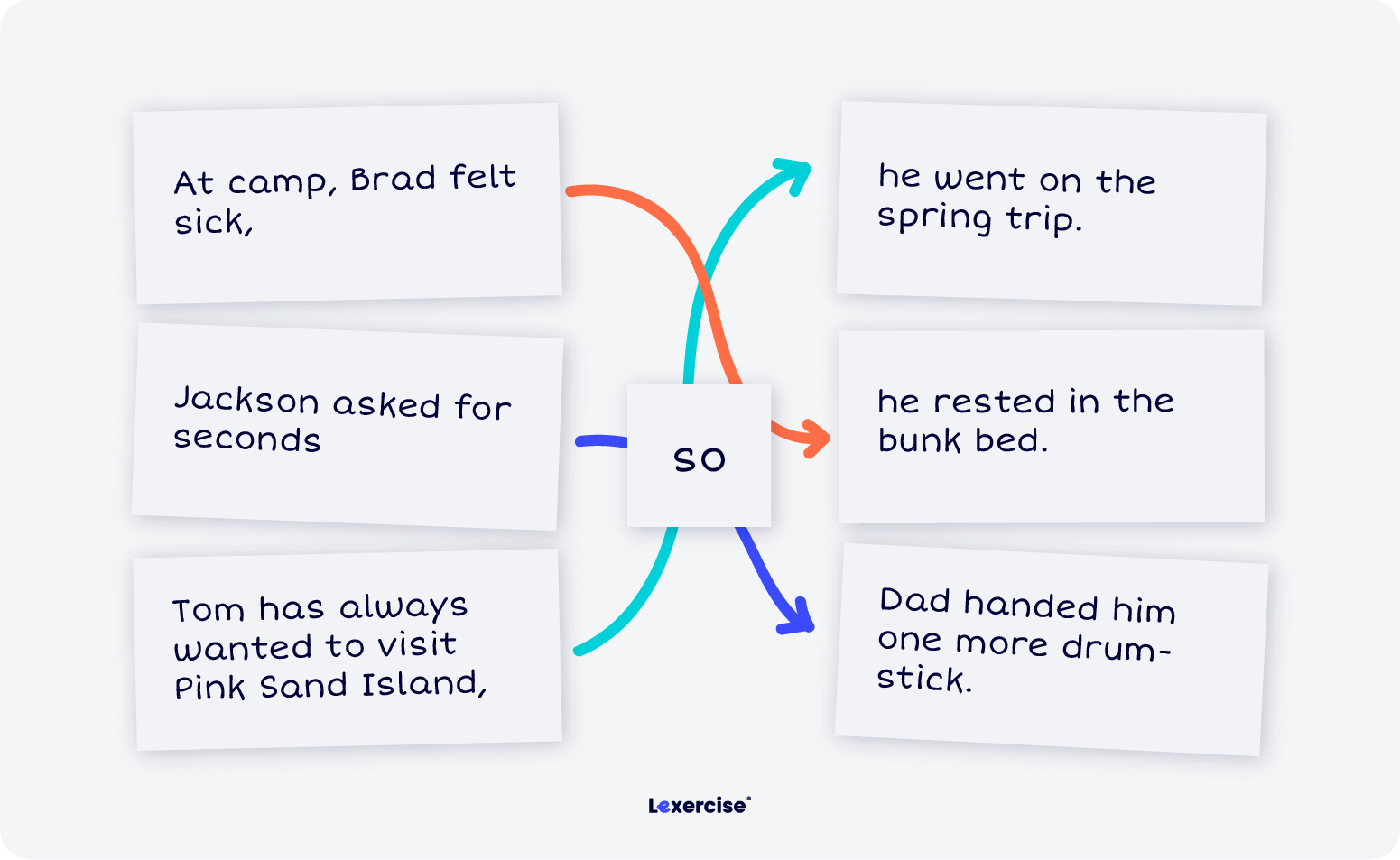
One important insight from reading science is a simple concept: What is practiced is learned. Most struggling readers, including those with dyslexia, need a treatment plan that focuses strongly on phonemic awareness, decoding, and spelling. Since students with Developmental Language Disorder (DLD) often have additional and specific difficulties with comprehension, they will likely require a treatment plan that includes an emphasis on comprehension. Below is an example of a comprehension exercise from theLexercise Structured Literacy Curriculum™. This exercise uses sight words and words with letter-sounds that the student has already covered. But in this exercise, the focus is on the comprehension of meaning. The student's job is to connect each sentence on the left with the sentence on the right that makes the most sense.
A struggling reader will make much faster progress when the intervention is matched to their strengths and weaknesses. For that reason–and many others–we strongly recommend parents seek individualized, professional assistance from qualified practitioners.
If your child is a struggling reader, speller, or writer, consider working with one of our literacy experts to help your child reach expected levels in just a few months. See this video for more information.
* Note: approximately 5% of the population experiences delays with reading caused by significant development delays, caused by more global intellectual functioning delays, not dyslexia or language-based learning disabilities.
Improve Your Child’s Reading
Learn more about Lexercise today.
Schedule a FREE
15-minute consultation