
Signs Your School Doesn't Get Dyslexia
Written by Tori Whaley
Published on May 28th, 2015
The vast majority of students learn t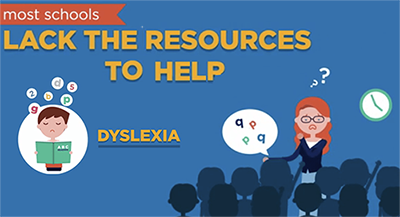 o read once they start school and parents rightly expect that it will only take a few years until their child develops into a proficient reader. While general reading instruction is targeted at “middle of the road” kids, schools are also expected to adapt their curriculum and instruction to accommodate children who do not succeed in the general classroom.
As we speak with parents all over the country, we find that schools accomplish this with varying degrees of success. The range is very wide with the best schools training their personnel in structured literacy (formerly known as Orton-Gillingham). We applaud these programs and wish more schools would adopt similar approaches. Other schools don’t even acknowledge the existence of dyslexia, treating it as “the D word”.
Obviously, if school personnel won’t even say the word dyslexia, they are not prepared to educate children with that condition!
Here are a few more signs that a school doesn't get dyslexia and is not prepared to teach children with dyslexia.
- They don’t test for or diagnose dyslexia. Many schools won’t use the term “dyslexia” to diagnose students. They may tell parents that dyslexia is a medical diagnosis or that they only test for learning disability. If your school won’t diagnose dyslexia, they are not likely to treat it effectively.
- They “don’t identify dyslexia or reading disability until third grade.” Despite the reality that children with dyslexia are born with dyslexia, schools often refuse to evaluate students until later in their academic careers. Children as young as 5-6 years old can be tested for and identified with dyslexia. Waiting a diagnosis can be so harmful to students! A school that would delay diagnosis and treatment for years is not likely to treat dyslexia successfully.
- They don’t use appropriate assessments. Schools use various instruments to screen students’ reading and make sure they are “on track.” If assessments do not heavily weigh a student’s phonological awareness and ability to identify unfamiliar words free of context but rather use books with pictures, which allow students to use context to identify words, students with dyslexia may perform in the average range until late second or early third grade. These tests do not screen for dyslexia and if your school doesn’t know that, they probably can’t treat dyslexia either.
- They teach kids how to guess. The research is clear: a “whole language” approach to reading fails many students. Yet, we see students receiving that type of instruction, not only in general education classes, but in their interventions. Students with dyslexia are inclined to use context and guessing strategies to the detriment of their overall reading development. If your school encourages this, they don’t have the right approaches to treat dyslexia.
- They encourage you to retain your struggling reader or attribute reading failure to development. Retention is only an effective intervention for a very small number of students. For kids with dyslexia, it is a terrible idea. Repeating a grade means a second year with instruction that has proven ineffective for the student. Students with dyslexia don’t need more instruction, they need the right instruction and accommodations. If your school doesn’t know this, if they strongly encourage you to retain your child, chances are they don’t know how to treat dyslexia.
- They tell you your child can’t have dyslexia because his or her grades are too high. Some students with dyslexia do great on spelling tests. It requires a lot of work to memorize all those words each week, but they still do quite well at it. Later, they usually don’t retain the spelling patterns for those words. High grades in spelling or reading do not mean a child does not have dyslexia. If your school doesn’t know the difference, they probably can’t treat dyslexia either.
- They won’t commit to a particular approach or program. Schools need flexibility to use whatever approach or program is effective with students. Yet, for students with dyslexia, we know what works: multisensory structured literacy. The simplest way for school personnel to implement this approach is by adopting a particular curriculum, based on that approach. If your school doesn’t name this specific approach, they probably don’t know enough about dyslexia to provide effective treatment.
None of these things happen because of schools’ ill intent. Nobody is conspiring to see kids with dyslexia fail. Yet schools rarely provide successful, effective intervention for these students. If your school is not prepared to provide effective intervention now, waiting for them to get ready wastes valuable time!
Watch this video to see how you can get your child reading successfully today.
------------------------------------------------------------------------------------------------
(Here is a related article on why schools struggle to to help dyslexic students.)
Improve Your Child’s Reading
Learn more about Lexercise today.
Schedule a FREE
15-minute consultation