
Teletherapy: Dyslexia Help at Home
Written by Elyse Loudenbarger
Published on March 15th, 2023
In a post-pandemic world, many people have personal experience using video conferencing platforms to participate in meetings or classes. Chances are you’ve developed an opinion about how this experience went for you. Now that you are looking for dyslexia help at home, you may be wondering if this is an effective approach for your child.
The short answer is: Yes, teletherapy can be as successful as in-person therapy. There are a few reasons for this.
How Can Teletherapy Be as Successful as In-Person Therapy?
- Individualized Engagement - Teletherapy is different from sitting in a video conferencing session listening to a speaker present information about a topic. Lexercise lessons are one-on-one and interactive with a live, in-person therapist. The student gets frequent, conversational response challenges to check for understanding. The therapist may use Socratic dialogue or ask the student to explain a concept in their own words. In addition, the student can annotate or write on the screen. Games and activities are often incorporated to further engage the student.
- Effective Practice - In traditional therapy, the student typically meets with the therapist once or more a week but has no reliable way to practice between lessons. Yet we know from research that frequent practice is essential for progress. This is where Lexercise teletherapy provides an innovative, engaging advantage! Lexercise online student games are designed to review concepts taught in each teletherapy lesson and provide practice with feedback, making practice fun, engaging, and effective! Additionally, parents sit in on each lesson and learn the concepts along with their children. With a supportive therapist in your corner, you’ll be equipped to help when needed.
- Access & Availability - Teletherapy provides systematic, research-based instruction so that even those who do not have an educational therapy practice in their local area can access dyslexia help at home. As an added bonus, sessions do not have to be missed due to travel, weather delays, or concerns over contagious illnesses. In fact, Lexercise teletherapy sessions can be conducted from anywhere in the world that has an internet connection.
- Extra Features - Lexercise’s therapist preparation program is accredited, so you can be confident that the therapist you are working with has been vetted by rigorous standards and is highly qualified to provide structured literacy instruction. Lexercise teletherapy also offers optional shared (parent-led) practice activities and practice data reports for progress monitoring. And, with all Lexercise subscriptions, you have your own Lexercise therapist who can answer your questions and help when needed.
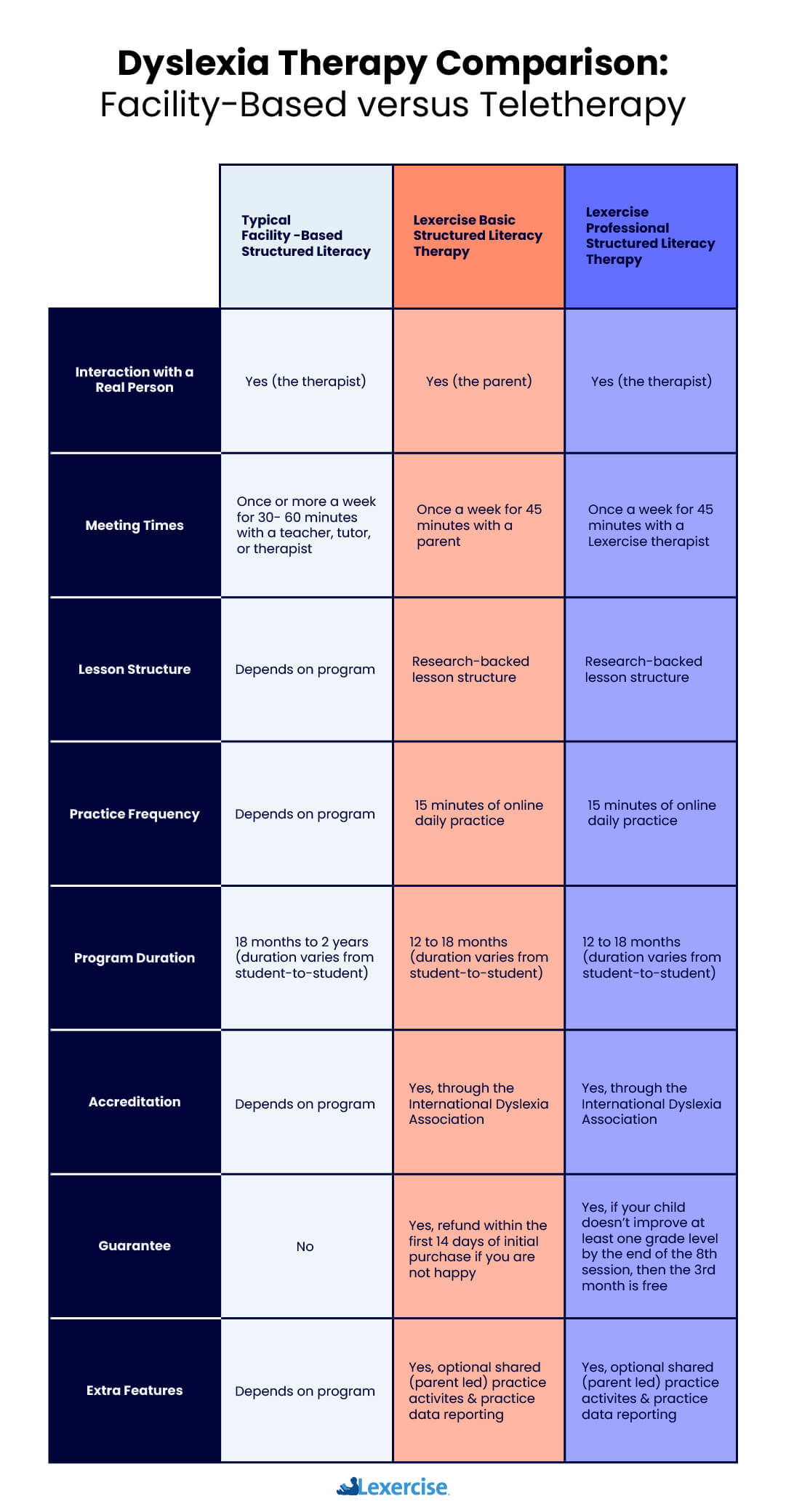
Below is a comparison of typical, facility-based structured literacy intervention with Lexercise’s online structured literacy intervention.
What About Screen Time Limits?
The last update from the American Academy of Pediatrics came in 2016 and emphasized the importance of high-quality programming and parent co-viewing for school-age children. In more recent years, the focus has shifted from time on screens to content on screens. Time spent on screens isn’t automatically negative; it depends on what the child is actually doing when engaged on a screen. Common Sense Media identified four categories of screen time: passive, interactive, communication, and content creation. The Human Screenome Project further details how two different people can spend the same amount of time on a screen, yet the activities they are engaged in can be vastly different.
Typically, the main concern is that excessive passive screen time could prevent children from engaging in developmentally appropriate activities like interacting with others or learning. Lexercise teletherapy sessions are interactive and involve one-on-one communication with a live person under parental supervision. Lexercise online student games are interactive and provide high-quality reinforcement. Lexercise utilizes the power of technology to provide research-based literacy interventions that enhance learning.
In fact, reading difficulties that go untreated can result in anxiety, stress, and negative thoughts. It is in the best interest of a child’s overall health to address reading concerns as early as possible to prevent what is known as the “Vortex of Dyslexia.”
Helping Your Child with Dyslexia at Home

Teletherapy can be successful for your child through a combination of a therapist who knows how to teach language structure, customized daily dedicated practice, and a structured literacy methodology. Lexercise teletherapy offers all three of the needed ‘legs’ to create a firm foundation on which to build your child’s reading, spelling, and writing proficiency. Lexercise teletherapy offers individualized engagement, effective practice opportunities, extra features, and online accessibility so that your child can receive research-based, quality dyslexia help at home.
If you suspect your child has dyslexia or other learning disability, take one of our free learning disabilities screeners or schedule a free consultation.
Improve Your Child’s Reading
Learn more about Lexercise today.
Schedule a FREE
15-minute consultation