
What Causes Dyslexia?
Written by Jen Parra
Published on March 31st, 2025
One of the most common questions families ask is: “What causes dyslexia?” The simple answer is this: dyslexia is caused by differences in how the brain processes language. Specifically, certain areas of the brain that support reading and spelling do not activate as efficiently or automatically in individuals with dyslexia. These differences are neurobiological, meaning they stem from how the brain is wired—not from intelligence, motivation, or effort.
Dyslexia often runs in families, meaning genetics can play a role. Environmental and developmental factors may also influence how reading-related brain networks develop. Below, we’ll break down these key causes in more detail.
Neurobiological Causes: How the Brain Processes Language
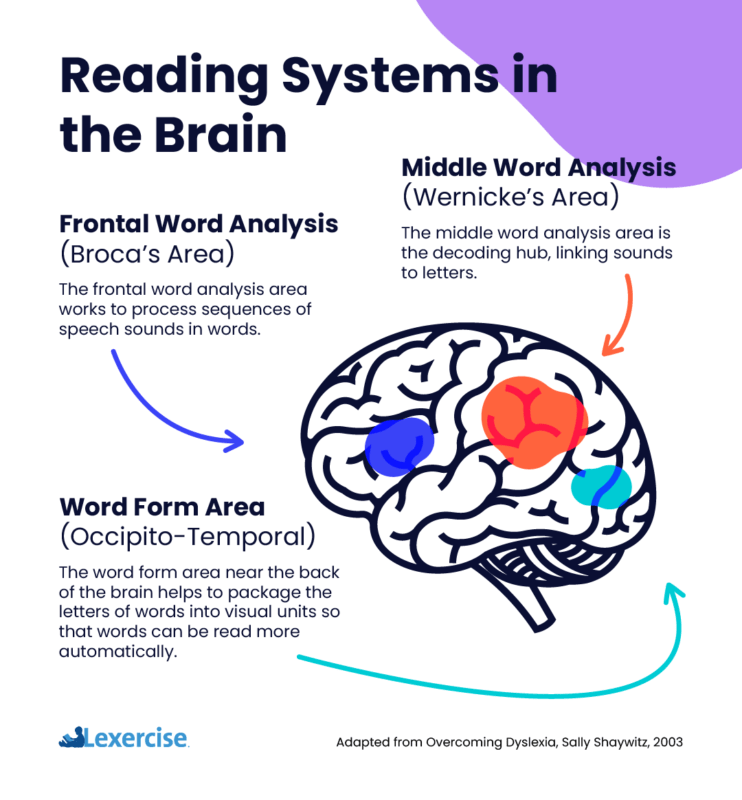
Researchers have identified a complex network—a sort of geography—in the brain used by efficient readers:
- Frontal word analysis area (Broca’s Area): Helps process speech sounds.
- Middle word analysis area (Wernicke’s Area): Links sounds to letters (decoding).
- Word form area (occipito-temporal region): Packages letters into recognizable word forms for automatic reading.
Genetic & Hereditary Factors
Dyslexia frequently runs in families. Research shows that if a parent or sibling has dyslexia, a child is more likely to have it as well. In fact, studies suggest that genetics may account for about 50–60% of the risk.
Several genes have been associated with dyslexia. These genes influence how the brain develops connections between language and reading areas.
Common Myths About What Causes Dyslexia
It’s important to clear up a few misconceptions:
- Dyslexia is not caused by laziness, poor motivation, or low intelligence.
- It is not caused by bad teaching or lack of exposure to books.
- It is not caused by vision problems or seeing letters “backward.”
Dyslexia is rooted in the brain’s language processing—not in external factors like effort or attitude.
Connect with a Dyslexia Teletherapist for a Free Consultation
Helping Your Child with Dyslexia
Great news, though! Researchers have also confirmed that our brains have a certain amount of “plasticity,” or the ability to develop new processing skills and links. Explicit instruction using structured literacy concepts paired with intensive practice and repetition can change the brain patterns of students with dyslexia or other reading and writing challenges. When they learn to use the brain’s reading network they can become efficient readers and spellers.


This blog article has been written by Lexercise’s expert therapy partners, Jen Parra, and Christy Olsson.
If you suspect your child has dyslexia, you can learn more about the 20 Most Common Symptoms or take the Lexercise dyslexia test. If you’d like to connect with Jen Parra or Christy Olsson, schedule a free consultation today.
Improve Your Child’s Reading
Learn more about Lexercise today.
Schedule a FREE
15-minute consultation