
How To Help A Child With Dyslexia At Home
Written by Sandie Barrie Blackley, Speech-Language Pathologist
Published on August 28th, 2020
 Many parents find it difficult to know how to help a child with dyslexia at home. As a result of COVID-19, this challenge has grown as schools transition to distance and blended learning and teaching responsibilities increase for parents. Unfortunately, parents may not get all the support they need from their child's school. Thankfully, there are many scientifically backed activities and approaches to help a child with dyslexia at home. Here are our top 5:
1. Provide structure and routine
Schoolwork can be stressful, especially for a child with a learning disability, but it doesn’t have to be. Structure and routine are extremely beneficial when parenting any child, especially one with dyslexia. First, start by creating a set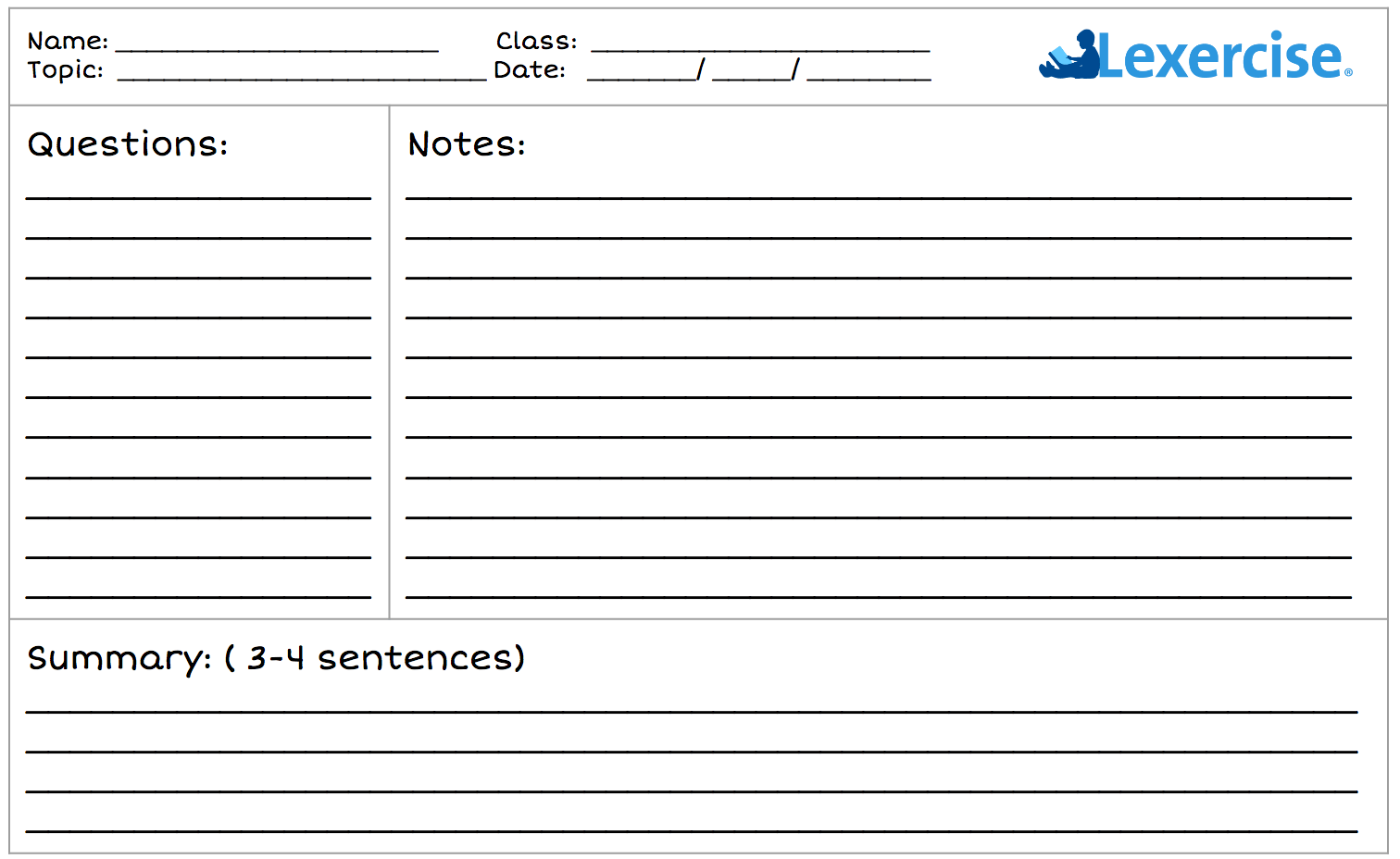 schedule and a dedicated space in your home for schoolwork. Break up their school, homework and practice into parts to provide mental breaks to recharge. If they are able to write legibly, encourage independence by asking them to take notes (using the Cornell method - see right) on reading assignments, recording questions for follow-up discussion. Praise their notes and summaries that capture the important points. Teach organizational habits such as writing down tasks and homework assignments in a planner and filing class notes into folders. Lastly, create a separation of school and home by putting away all school materials at the end of the scheduled school day.
2. Develop your child’s curiosity about words
T eam up with your child to investigate a word a week using the Word Inquiry method, an approach to word study that cements connections between meaning and spelling patterns.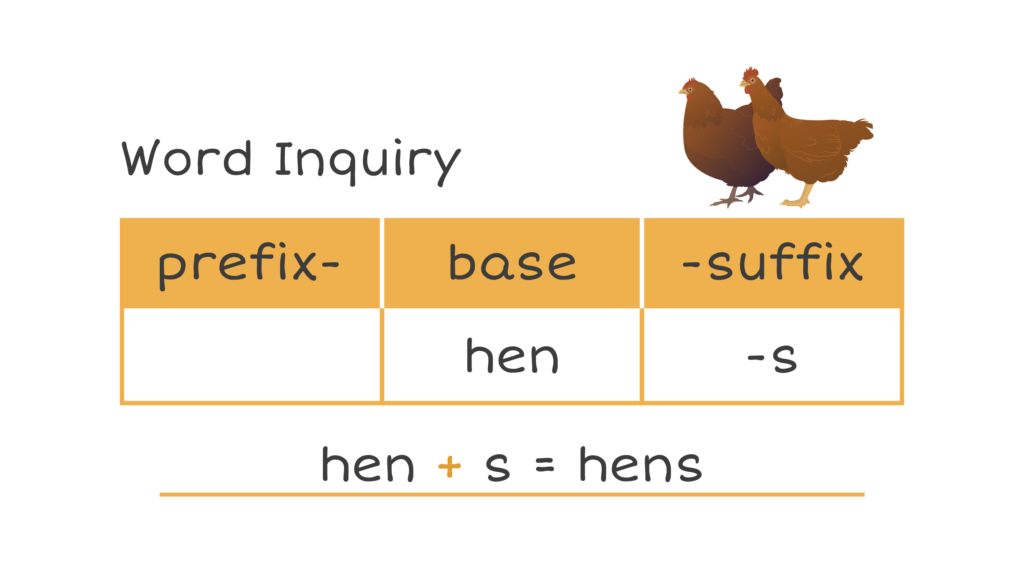 Work with your child to create a
word sum by breaking the word into parts: prefix, suffix and base and discussing the meanings of each. Word Inquiry does not put a heavy burden on working memory or processing speed, so students who might otherwise resist word study often enjoy it and excel at it. See it in action in this tutorial with expert Pete Bowers, PhD. Word Inquiry is the main vehicle for explicit teaching about word parts (morphology) in the Lexercise Structured Literacy Curriculum©
Work with your child to create a
word sum by breaking the word into parts: prefix, suffix and base and discussing the meanings of each. Word Inquiry does not put a heavy burden on working memory or processing speed, so students who might otherwise resist word study often enjoy it and excel at it. See it in action in this tutorial with expert Pete Bowers, PhD. Word Inquiry is the main vehicle for explicit teaching about word parts (morphology) in the Lexercise Structured Literacy Curriculum©
3. Use a structured literacy curriculum
To gain proficiency in reading, spelling and writing dyslexic students need to be taught with a program that is research backed. The structured literacy (AKA, Orton-Gillingham) approach is supported by more than three decades of research from The National Institutes of Health making it “the gold standard” in teaching students to read and spell. It is not only the most effective method for students who are struggling with reading words and spelling them, but it is the most effective method for teaching the foundations of literacy to all students. This multisensory approach makes learning an active process, connecting sounds to letters and making sense of spelling. This is how you teach a dyslexic child to read and spell more automatically and fluently.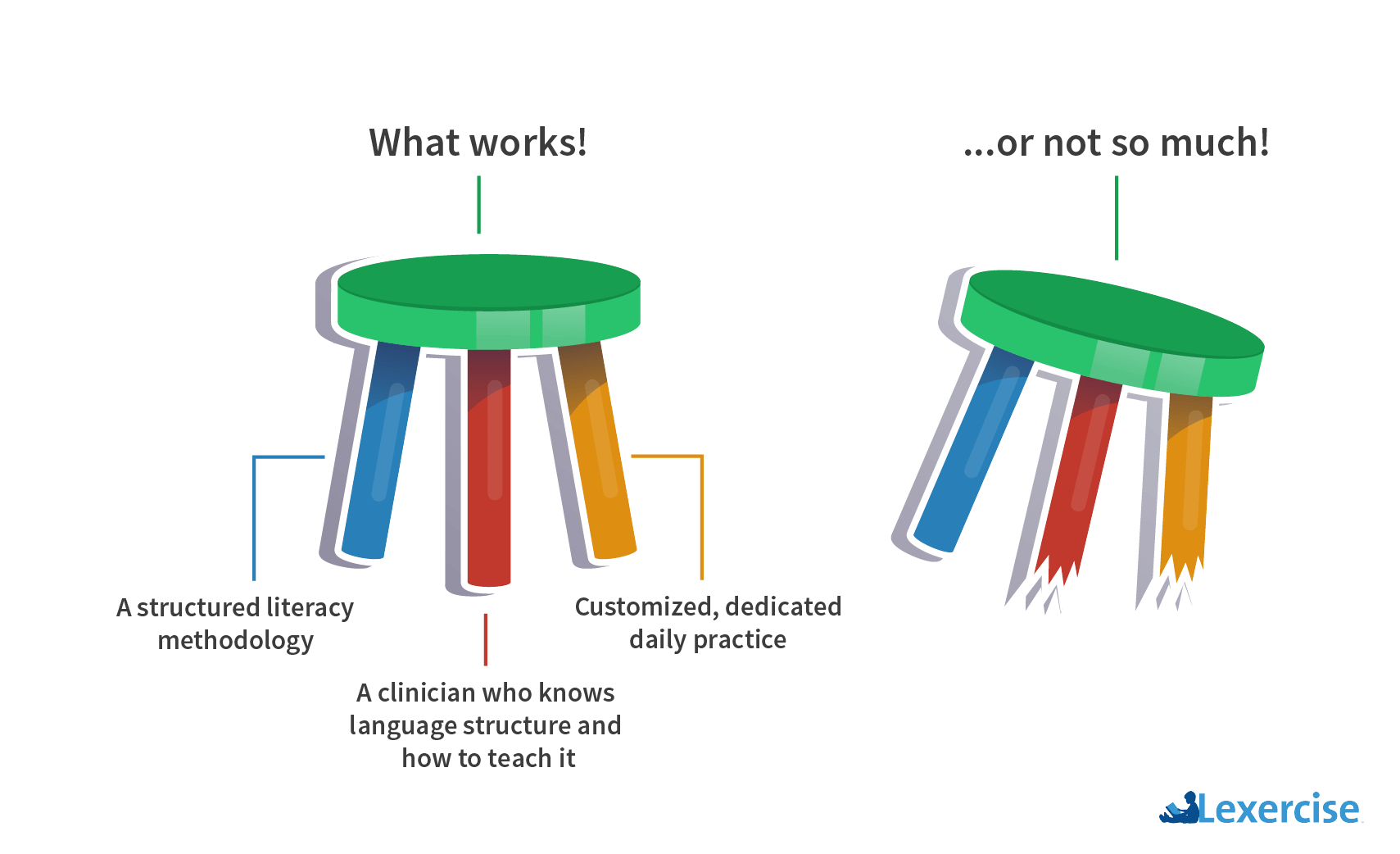
4. Think outside-of-the-box when it comes to reading practice
We’ve all heard the saying “practice makes perfect”, and in life we’ve all seen it’s true. Neuroscience confirms that regular practice is a crucial component in learning a new skill. Encourage additional reading practice outside of school and homework by using other sources like joke books, comic books, graphic novels, and cookbooks. Additionally, sometimes reading using technology will be more enticing if they have been looking at paper books all day. Consider letting them play games on their laptop or tablet for a specified amount of time after completing a reading assignment, so that they want to read in order to play the games. Consider motivating your dyslexic teenager by leveraging their time on social media. They will be reading captions and comments about people and things they are interested in. Talk with them about what they read and what it means. This will also help your child realize that, while information is everywhere, careful reading and thinking is often necessary for full understanding.5. Use assistive technology to your advantage!
Assistive technology has greatly improved in quality and quantity over the past few years. One great resource is the text-to-speech functionality found on most computers, tablets and phones that will read text aloud. (Pro tip: this is a built in function to all Google Chromebooks, the same ones that many schools are supplying for at-home learning.) Other great tools include audiobooks, word prediction, spellcheck (especially those that check at a sentence level and catch misspellings of words like "their" and "there"), and electronic graphic organizers. Read more about these resources here. Helping a child with dyslexia at home can feel overwhelming, but we are here to help! Schedule time to speak with a qualified dyslexia expert.Improve Your Child’s Reading
Learn more about Lexercise today.
Schedule a FREE
15-minute consultation