
Learning Methods and Note Taking Skills for Dyslexic Students
Written by Sandie Barrie Blackley, Speech-Language Pathologist
Published on January 24th, 2017
 Dyslexia has been defined as a neurological disorder that causes difficulties with accurate word reading and spelling. Listening comprehension is typically a strength, but reading comprehension may be weak due to disruptions when reading words.
Dyslexia can cause significant academic problems because, especially after 3rd grade, teachers expect students to be independent readers. Strategies that help students comprehend and remember what they read can be helpful.
Yale University has provided note-taking and study tips for students . These techniques can be adapted for elementary school students. The Cornell Method of note-taking remains one of the most popular and is outlined below:
Cornell Note-Taking Method
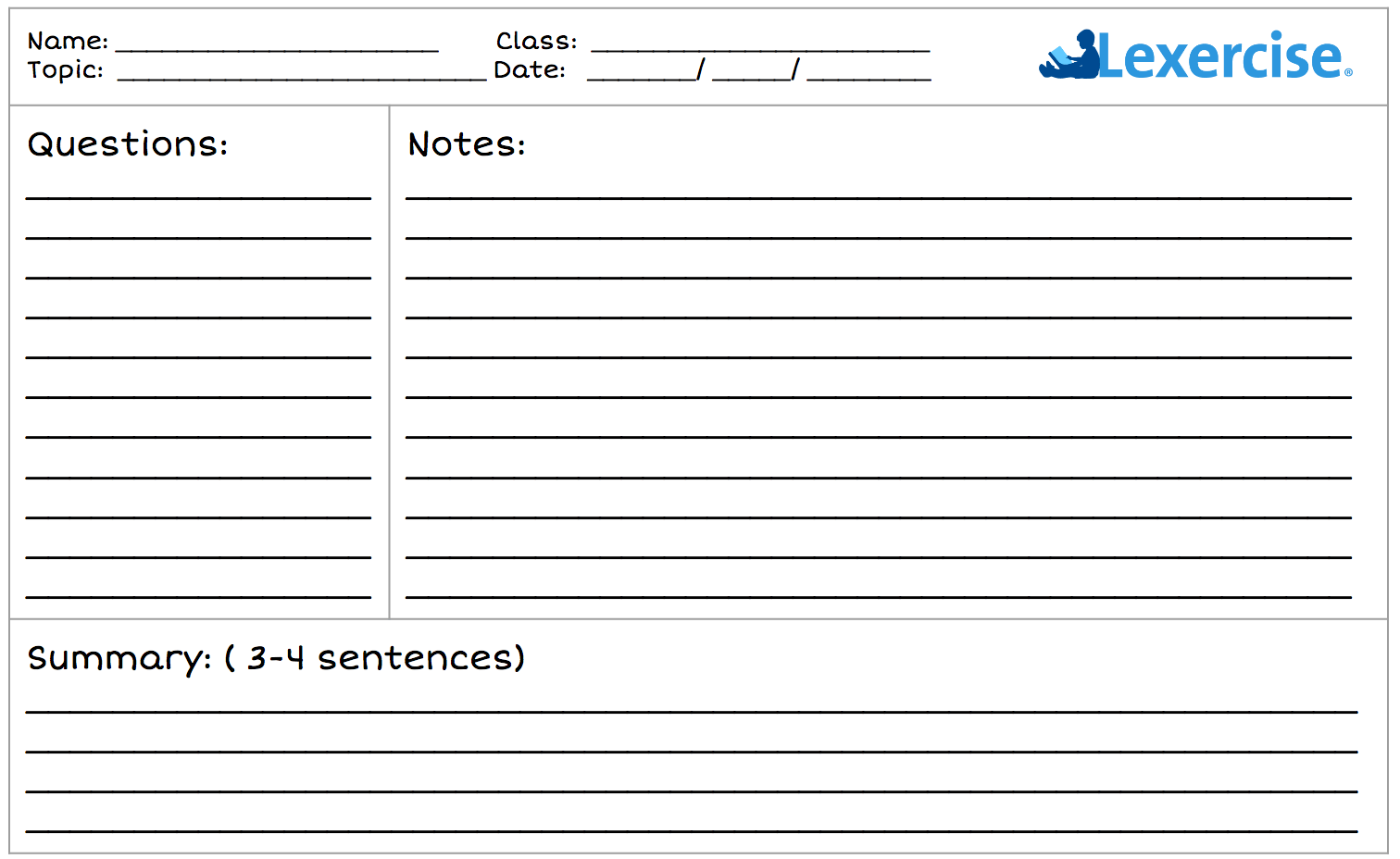
When taking notes on a reading assignment or lecture aim to take down the main points rather than copying everything verbatim. Call out any questions or points you don’t understand. Use diagrams or sketches if that helps. Finally, write a 3-4 sentence summary.
Divide the page of your notebook into three sections:
- Notes (main points)
- Questions and/or illustrations
- Summary
Note-taking strategies can be helpful, but the student must have a basic skill level to use note-taking tips. For example, the student must be able to write legibly enough and with
good enough spelling that they can later read and make sense of what they have written. Students who are not quite at that point may be showing symptoms of dyslexia. You can screen your child for dyslexia in 10-15 minutes here, for free. Dyslexic students benefit from technological accommodations and research-backed intervention. Our dyslexia therapists meet and exceed leading knowledge and practice standards for teaching reading and spelling. Sign up for a free fifteen-minute consultation here.
Improve Your Child’s Reading
Learn more about Lexercise today.
Schedule a FREE
15-minute consultation