
Reading Tools That Don't Work: Guessing
Written by Sandie Barrie Blackley, Speech-Language Pathologist
Published on September 2nd, 2016
Blog Bites
- Public schools teach guessing which is an ineffective way to learn
- There are four different categories of guessing for reading comprehension
- If your child is a guesser, there are techniques to reverse their ways of thinking
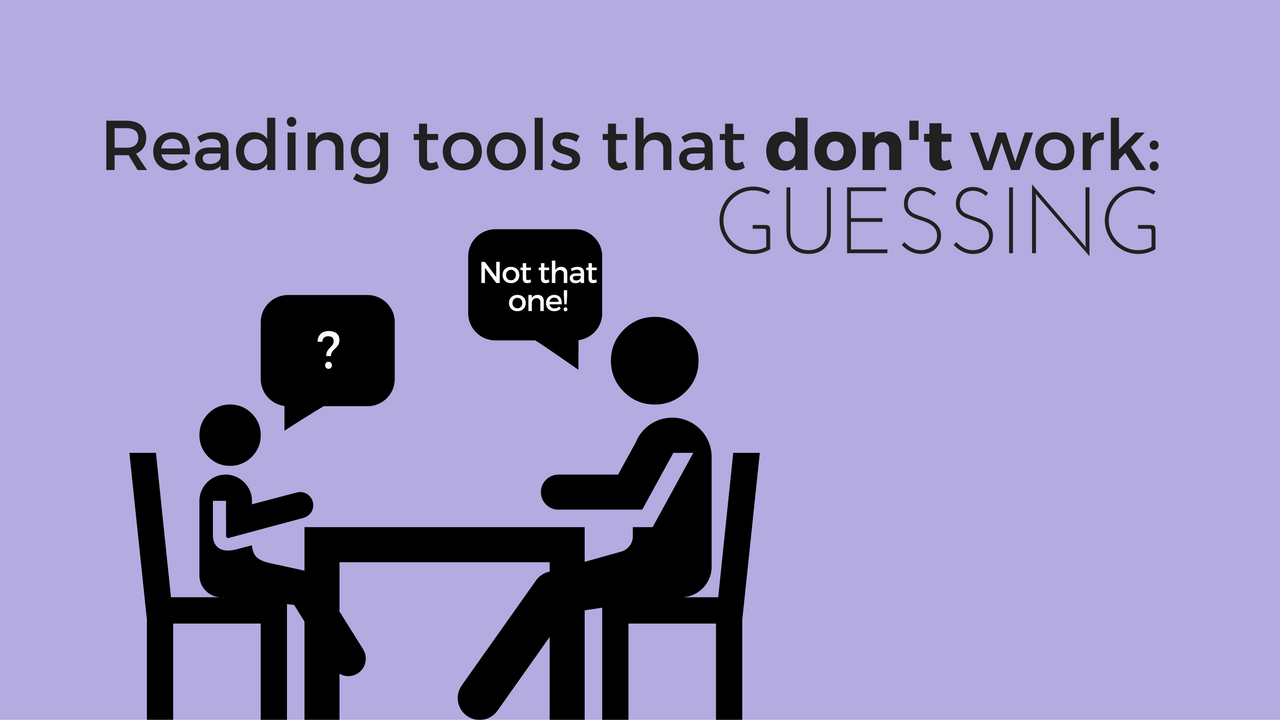
Guessing instead of learning is a problem that a lot of young students struggle with. Unfortunately, some teachers actually teach students to guess at a word’s identity based on context, the visual appearance of the word, or even pictures on the page. Some professors of education even advocate for this ineffective teaching approach. Almost forty percent of our nation's fourth graders are not on reading level, and a good portion of these students were likely taught the guessing method.
So, how do we break this habit in our children?
First, you need to identify if your child is indeed a guesser. There are four main types of guessers.
-
 First Letter Guesser: They look at the first letter and guess after that. They often mistake words like happy for words like healthy.
- Word Shape Guesser: They look at the first and last letters of a word in addition to the shape in the middle. They often mistake words like crow for words like crew.
- Picture Clue Guesser: They look at the pictures near the word in question. They are simply using the words they know from the sentence to fill in the blanks according to what’s happening in the picture.
- Context Clue Guesser: They will use the words they know in the sentence and their previous knowledge of the situation to fill in the blank. If they came across a sentence like “The cat chases the money” they might guess “mouse” instead of “money” because it makes sense in that context.

If your child fits one of those descriptions, you can try using the blending method at home. All you need is letter tiles (or small pieces of paper with a separate letter on each). Pick a word and separate each letter it uses. Ask your child to sound out each letter individually, and when they have done that, tell them to blend the sounds together. This will act as practice for your child to get used to sounding the letters out without having them physically separated.
This is a multi-sensory technique. Lexercise’s Structured Literacy Curriculum uses research-backed, multi-sensory methods to teach your child how to read, write and spell confidently and independently. Please watch this video to learn how we partner with you to teach your child.
Improve Your Child’s Reading
Learn more about Lexercise today.
Schedule a FREE
15-minute consultation