
Defining Dyslexia
Written by Sandie Barrie Blackley, Speech-Language Pathologist
Published on March 31st, 2025
 For all of us who are affected by dyslexia, it is important to stay up-to-date with regard to how dyslexia is defined, understood, and perceived.
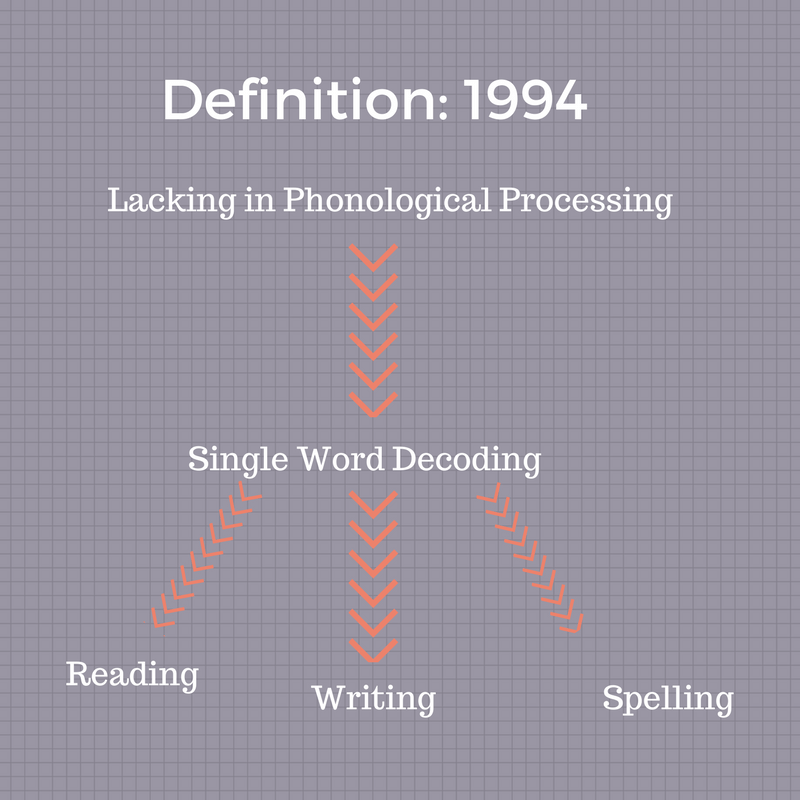
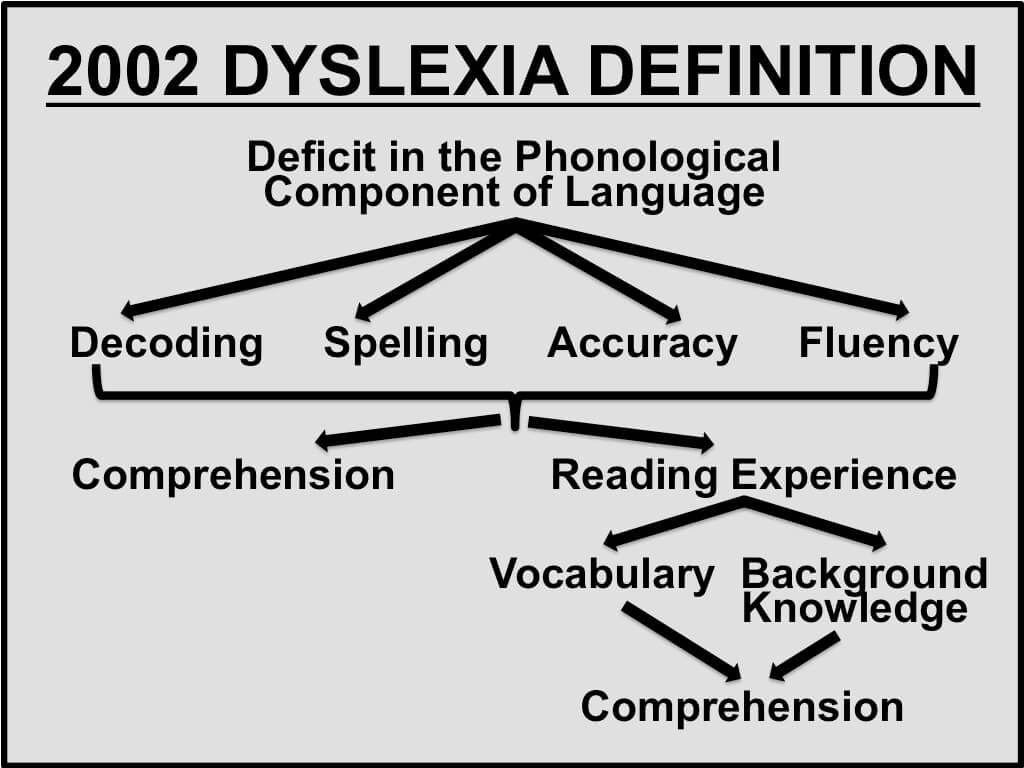
Emerson Dickman has been working to develop and promote a universally accepted definition of dyslexia and has recently provided his take on the current definition of dyslexia. The commonly accepted definition up to 1994 specified that the reading and writing difficulties in dyslexia were caused by insufficient phonological processing, as well as difficulty with decoding words. Here is a graphic outlining the previous definition:
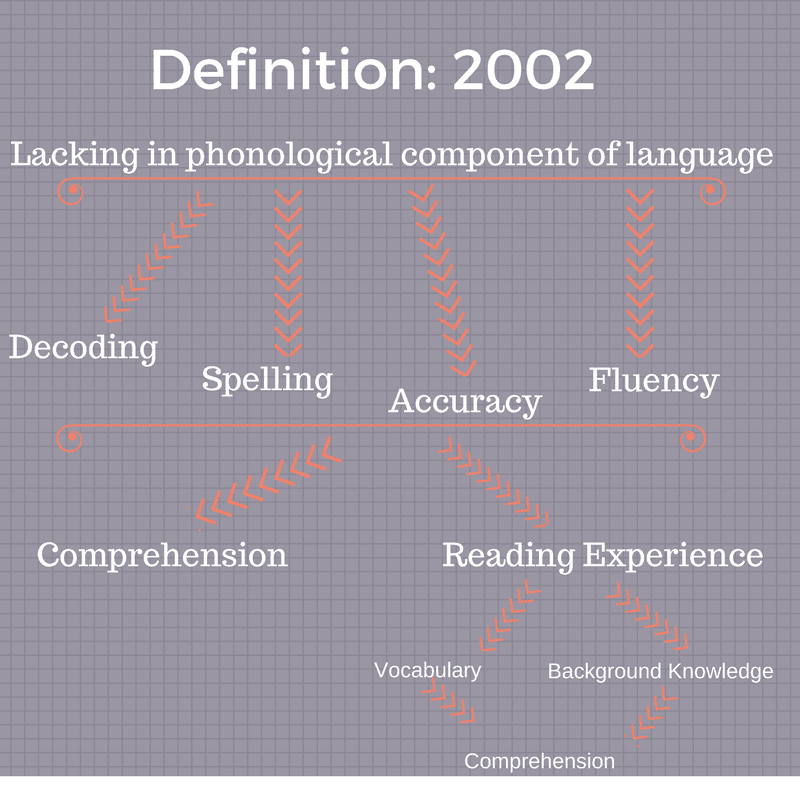
Research over the last few decades has suggested refinements in the definition. Dickman and colleagues have developed a working definition that states that dyslexia is characterized by difficulties in fluent word recognition and also by poor spelling and decoding abilities. It is important to note that dyslexics' learning speed and efficiency is at least average in areas that do not depend on reading and spelling. A dyslexic child who struggles with reading and spelling may develop strong skills in other areas, such as visual arts or music! But difficulties with spelling and word recognition may impact reading comprehension, which can then limit academic achievement, reading experiences and reading enjoyment.
This article provides an informative break-down of the definition of dyslexia to help you understand the nuances and relevance for your child.
You may be thinking, “Does a change in the definition mean anything for our situation?”. It may, in that the change may give you a better understanding of the meaning of dyslexia and its impact. As discussed in the article, tax-supported special education services in public schools are usually undifferentiated, group treatment and available only for the most severely impaired students. Parents may want to seek help outside public education if the public school is not providing effective help.
Lexercise provides effective, research-based, structured literacy therapy that can help kids when schools can't. The platform empowers families to to help their struggling reader, speller or writer through online therapy from literacy experts combined with daily practice activities. This help may be less expensive than you think. But one thing is pretty certain: In terms of a child's future, doing nothing is likely to be the most expensive choice of all. Click here to learn more about how Lexercise's structured literacy therapy might your child.
Improve Your Child’s Reading
Learn more about Lexercise today.
Schedule a FREE
15-minute consultation